
Category Archives: healthy beverage vending machines in New York City

Bottled Water: It’s Healthy for You and New York City

Bottled Water in New York City

The relationship between the bottled water industry and New York City consumers has had its ups and downs. But recent news from the International Bottled Water Association (IBWA) is good news for everyone. A recent study found that bottled water now has the lowest water footprint of all packaged drinks, using a total of 1.32 liters of water, including the 1 liter of consumable water, to produce a 1-liter bottle product.

Environmental Impact

To decrease the amount of water used, the amount of energy spent, and the amount of plastic materials needed for the production of bottled water, the bottled water industry has developed new and innovative ways to decrease the number of resources spent. According to the IBWA, some of the changes include:

  • “Auditing total water use at bottled water facilities,
  • Reducing groundwater extraction through improved water processing and bottling processes,
  • Looking for leaks in all of their piping and tanks,
  • Planting drought-resistant vegetation at bottling facilities,
  • Reminding employees to be good stewards of the environment and encouraging water conservation,
  • Implementing water use restrictions at their facilities,
  • Implementing ultra-efficient cleaning methods inside plants to reduce water usage when cleaning reusable 3- and 5-gallon bottles for water coolers used in homes and offices,
  • Reducing the use of cleaners when sterilizing water pipes, storage tanks, and finished products,
  • Managing water withdrawals in a manner that ensures the long-term viability of the watershed, [and]
  • Using hydro-geological evaluations on springs to assess any potential impact on local groundwater levels and stream flows.”

The result is an industry that uses fewer natural resources, creates less waste, and produces one of America’s most purchased packaged drinks. As Jill Culora, IBWA’s vice president of communications, said, “consumers who are drinking bottled water instead of other packaged drinks are making a healthy choice—and also reducing the impact on the environment.”

Bottled Water in New York City

Health Benefits

Water offers multiple health benefits to those in New York City who drink it. According to the Centers for Disease Control, water helps to regulate body temperature, lubricate and cushion joints, and protect the spinal cord. Kathleen M. Zelman, MPH, RD, LD, the director of nutrition at WebMD, writes that water keeps our body hydrated which helps all of its systems to function properly, decreases muscle fatigue which can contribute to poor performance, and helps skin to stay hydrated and healthy.

Unfortunately, most of us don’t drink nearly enough water to make up for the water that we lose every day, which can lead to dehydration. Side effects of dehydration include lack of energy and fatigue. To combat dehydration, the Mayo Clinic recommends that men drink about 13 cups or 3 liters of beverages per day, and women drink about 9 cups or 2.2 liters per day. Additionally, researchers at the University of Illinois determined that the more water a person drank, the fewer overall calories that person consumed. For most individuals, a decrease in calories, even by a small amount, can positively impact long-term health.  

Do your New York City employees or students enjoy water as a pick-me-up during the day? If so, be sure to include bottled water in the office break room or school lunchroom vending machine. For the ultimate employee bonus, consider covering part or all of the cost of healthy vending machine snacks and beverages.

For more information about customizing your current vending machine options, or adding new healthy vending machines to your office break room or school lunchroom, contact Healthy Vending at 917.572.3671.
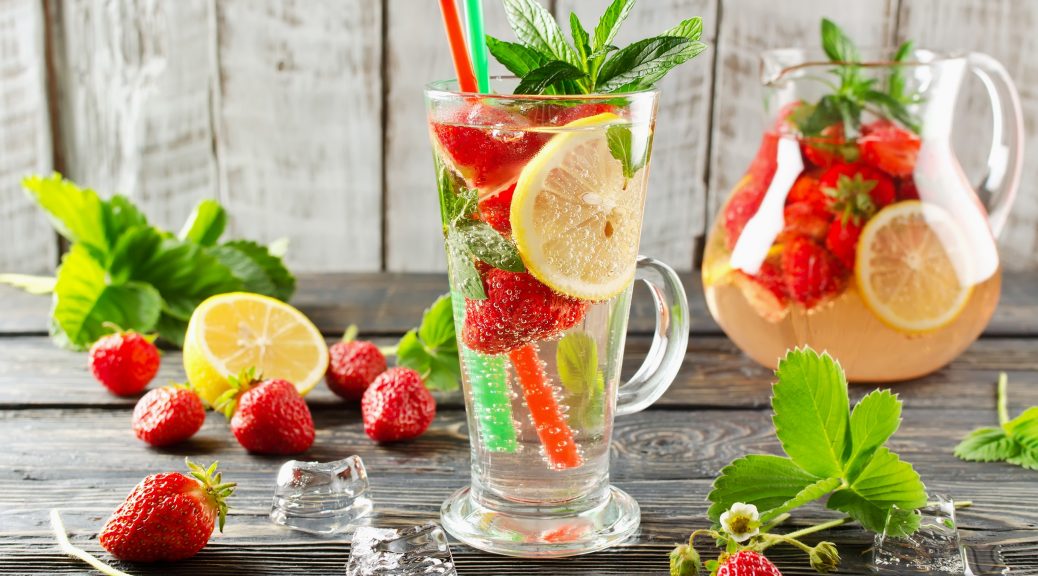
New York City Consumers Enjoy Beverages with Less Sugar

Healthy Vending Machine Beverages in New York City

What are your go-to beverages? Have your preferences changed over the past few years to include choices with less sugar? If so, you aren’t alone. Recent research has shown that consumers have the same concerns when it comes to choosing a beverage from the office break room vending machine as they do when choosing a snack.

Consumers are looking for variety, simpler labels, and more functional ingredients. There is, however, one more factor that is a bit more important when it comes to choosing both snacks and beverages—balancing sugar and calorie consumption.

And, it appears that New York City consumers are aware of its importance as soda consumption has declined for the 12th straight year. Smaller containers, an increase in prices for consumers, and in some cities such as Berkeley, CA and Philadelphia, a soda tax have also played a role in decreasing overall consumption. And that’s a good thing.

Consuming too much sugar can be damaging to different parts of the body. A diet high in added sugar can increase the risk for developing type 2 diabetes, and heart disease, even in individuals at a healthy weight, as well as cause weight gain and cavities. Empty calories from sugar often end up excluding healthier food choices, and opening the door for a deficiency in fiber, vitamins, minerals, and other nutrients. Sugar has also been found to negatively impact one’s mood, dopamine levels, and increase inflammation especially in one’s joints and skin.

A decrease in one’s quality of health isn’t the only cost. According to Anna Lappé and Christina Bronsing-Lazalde at The New York Times,”Nationally, we spent $245 billion on diabetes medical costs in 2012. By 2030 we could be spending as much as $818 billion on the direct medical costs of heart disease.”  

Healthy Vending Machine Beverages in New York City

To avoid consuming too much processed sugar, the American Heart Association recommends “that women consume less than 100 calories of added sugar per day (about 6 teaspoons) and men consume less than 150 per day (about 9 teaspoons).” Some processed sugars are easily recognizable such as those in cakes, cookies, and pies, but there are a number of processed sugars in unsuspecting products that are much harder to find. They include corn syrup, fruit juice concentrates, high-fructose corn syrup, honey, invert sugar, malt sugar, maple sugar, molasses, and sugar molecules ending in “ose” (dextrose, fructose, glucose, lactose, maltose, sucrose).

One way to help New York City employee’s decrease the amount of processed sugar consumed while at work is to offer beverages that contain little to no processed sugar in the office break room. Plain and naturally-flavored sparkling water, fruit-infused and plain non-carbonated water, and unsweetened teas are just a few of the many choices available. Not only will you be offering your employees a refreshing beverage, but you will be helping them to live a healthier life. And healthy employees have fewer sick days and are more productive.

That sounds like a win for everyone. To learn more about adding healthy beverage and snack options to your New York City office break room vending machines, call Healthy Vending at 917.572.3671. We would be happy to help you make the switch.

The Milk Category Expands, Meeting More Diverse Consumer Needs in New York City

Milk: it’s an essential source of calcium. But where milk was once a healthy beverage vending machines in New York Citystaple in the American diet, other beverages have gained market share. So how essential is milk to your patrons and your New York City employees? The answer isn’t simple. Milk products have diversified a lot over the years.
Total milk sales have lost market share in the beverage category every year for the past four consecutive years, according to the Beverage Marketing Corp., the New York City-based research firm. But that’s largely because the beverage market has expanded to include several categories that didn’t exist a few decades ago, such as energy drinks, sports drinks, ready-to-drink teas and value-added water.
As the beverage market has expanded in New York City, the milk segment has also expanded and created some niche categories of its own. So the bigger story is the diversification of milk. While still an important nourishment, milk has also become a refreshment.
Flavored milk, which has become a favorite, is both a refreshment and a nutrient. The flavored milk segment continues to grow.
Trends are also showing renewed interest in whole-milk products, which also saw unit sales increase in the last year.
Information Resources Inc., a research firm based in Chicago, tracks the following one-year shifts in the fluid milk category:
• Refrigerated skim/low-fat milk ($9.4 billion, unit sales down 4.8%)
• Refrigerated whole milk ($4.7 billion, unit sales up 3.6%)
• Refrigerated flavored milk/eggnog/buttermilk ($1.4 billion, unit sales up 6.5%) This segment was a real beacon of light for the milk category. The segment’s dollar sales increased 6% on the unit sales increase.
healthy beverage vending machines in New York CityInnovations in milk packaging have created growth opportunities, particularly the availability of shelf-stable products. This and other developments – such as the increased variety of national name brand milk products – support what many see as the rising importance of milk as a both a refreshment and a nutritional product.
Refreshment service operators have begun to recognize they need to offer more nutritional products as the public has increasingly scrutinized product offerings from all foodservice channels. Many operators recognize milk’s importance as a healthy offering.
The USDA beverage standards for K-12 schools includes unflavored, low-fat milk and flavored or unflavored, fat-free milk and nutritionally-equivalent milk alternatives.
Many nutritionists say flavored milk is a good alternative to soda, even if it contains more sugar than whole milk. Some nutritionists are concerned about the high sugar and saturated fat content in some of the flavored varieties, especially since many come in 14- and 16-ounce bottles and are likely to be consumed in one sitting.
While nutritionists are not in agreement on the nutritional benefits of some types of flavored milk, consumers should realize there is a tradeoff between having high sugar and saturated fat content along with the calcium content. The underlying point is that milk remains an important source of calcium, and milk products have diversified to meet different consumer needs.
Milk remains an important staple in consumer diets – serving as a source of nutrients and as a refreshment in New York City.
For more information about healthy snack and beverage options in New York City contact your refreshment services provider Healthy Vending at (917) 572.3671 to discuss your customized break room solution.